.svg)

the straight answer to curved Decking design

when the material works with your vision, the possibilities are endless
Outdoor spaces have a language of their own. Paths meander, borders flow, and gardens rarely conform to a straight line. Often, the best designed spaces embrace that natural rhythm, using curves to draw the eye, soften hard edges, and create a sense of place that feels considered and inviting.
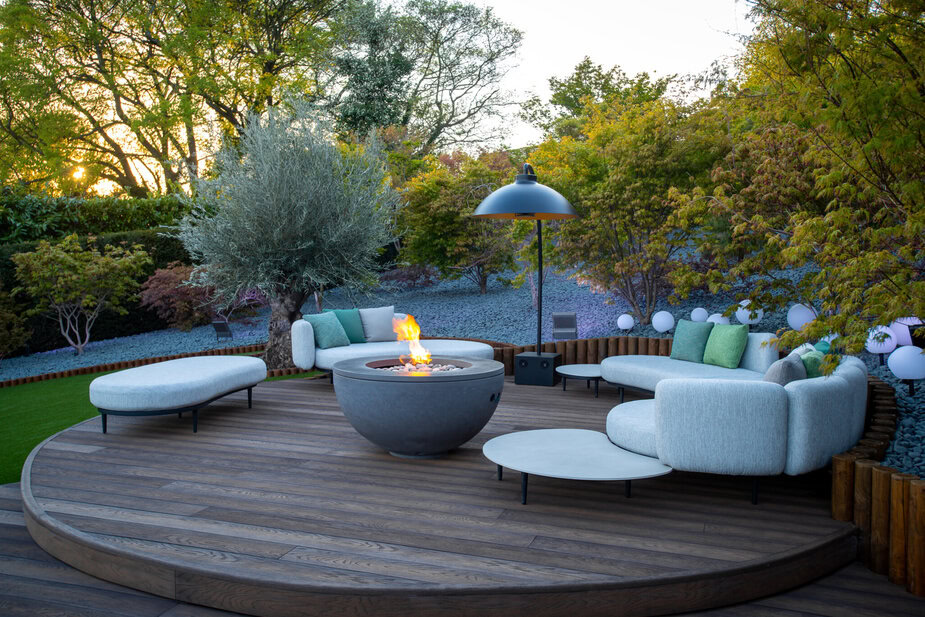
A curved deck edge pulls you towards it. A sweeping terrace feels generous rather than functional. Integrated seating that follows a gentle radius can encourages people to gather. These are not incidental details; they are where considered design becomes everyday pleasure.
The challenge has always been execution. Achieving a true, clean curve in a decked surface is not always straightforward with conventional materials. Timber, for all its natural beauty, has a grain direction that can resist shaping, and over time moisture and movement can distort even a carefully formed design. Some composite boards, while more stable than wood, are engineered primarily for straight runs and can be difficult to finish cleanly around a radius.
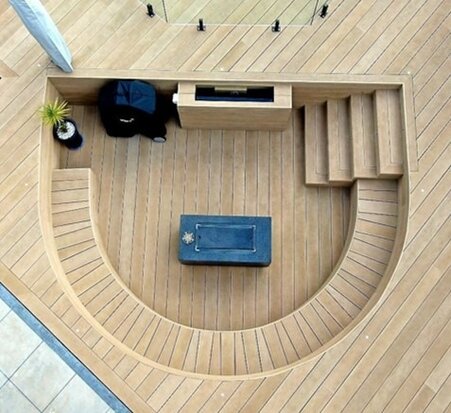
Millboard decking changes that. Designed to be cut and worked just like timber but without its limitations, and finished with fascia boards and flexible edging that trace curves cleanly, it is a decking system built from the outset to go wherever the design leads. The curve is no longer a challenge to be solved. It is simply part of what is possible.
DESIGNED TO BE WORKED, BUILT TO CURVE
There is no denying the appeal of natural timber. Its warmth, texture and character have made it the default choice for outdoor spaces for generations. But that same natural quality, the grain, the fibres, the organic structure, is also what can make it unpredictable to install to irregular designs and over time, prone to the movement that can undermine a carefully considered curved design.
Some composite decking boards improve on timber’s stability but remain best suited to linear layouts. Millboard decking is different. The boards can be cut, sawn and worked with standard tools, just as you would with timber, making it straightforward to achieve curved layouts on site without specialist equipment or additional trades.
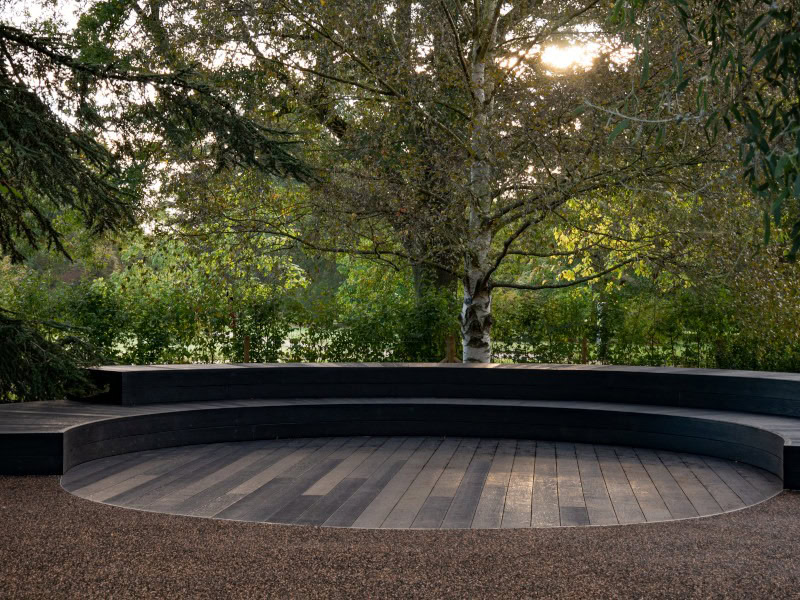
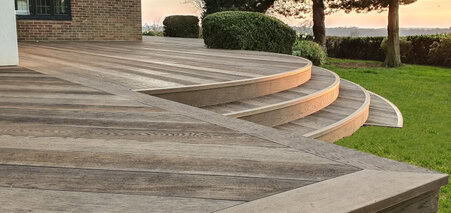
Where Millboard decking truly comes into its own is in the finish. Fascia boards can be formed to a radius of 1.2 metres, without the need for heated wraps, creating a smooth, continuous curved edge that looks intentional and properly resolved. Flexible edging follows the same line, ensuring the curve reads as a considered design choice from every angle. And because Millboard decking captures the rich texture and depth of natural wood without the compromises, there is no trade-off between beauty and performance.

A foundation built for curves
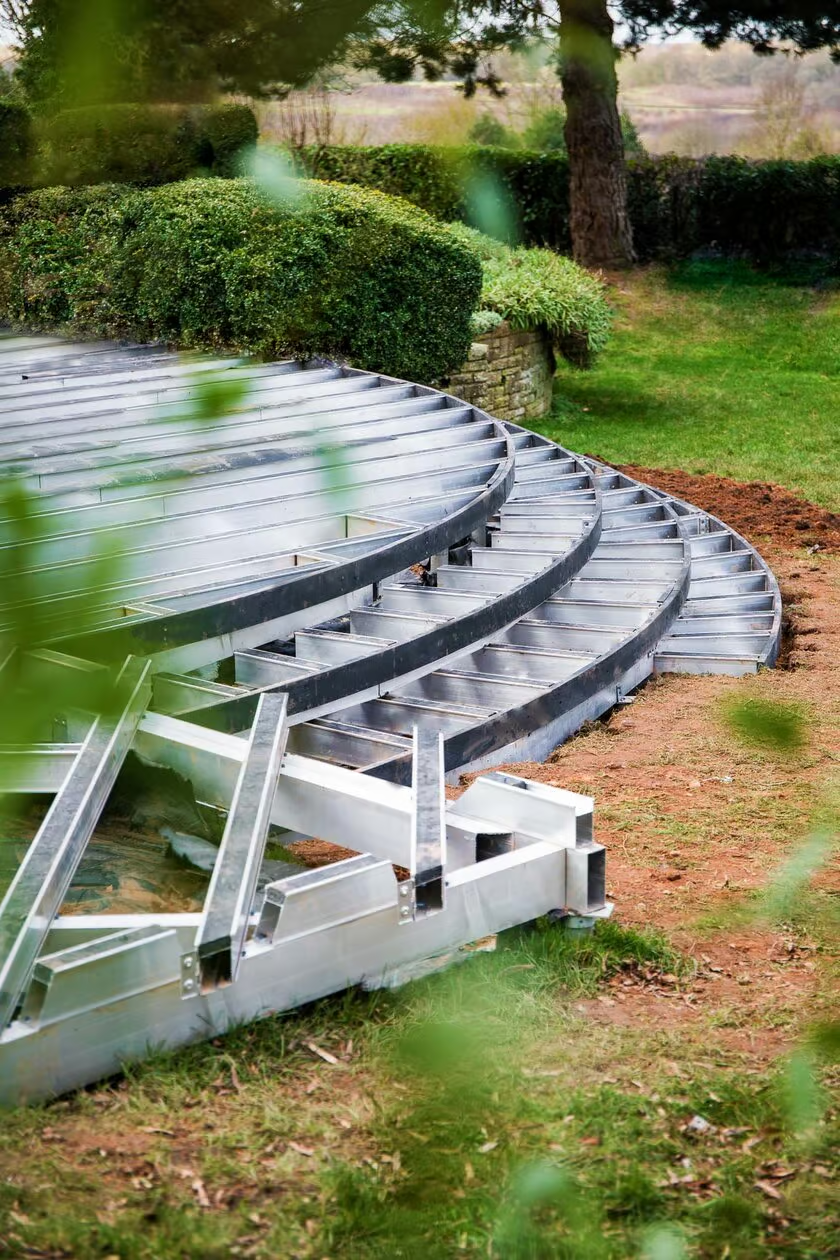
A great curved deck starts below the surface. Millboard’s Plas-Pro and DuoSpan subframe systems are designed to work in harmony with curved layouts, providing a stable, adaptable foundation that supports non-linear designs without the complexity or cost of a bespoke timber frame.
DuoSpan offers a lightweight, durable alternative to traditional timber joists, while Plas-Pro’s 100% recycled plastic construction gives installers the flexibility to create the precise support needed for curved and angled sections. Together, they can make curved builds more straightforward to plan, specify and install, helping to ensure the finished deck performs as well structurally as it looks visually.
A finish that looks intentional
A curved deck lives or dies on its finishing. A beautifully formed radius can be undermined by an edge that breaks the line, or joints that draw the eye to the construction rather than the design. Millboard decking’s system is designed to avoid both.
Fascia boards and flexible edging that follow a curve ensure the profile of a raised deck, shaped step or integrated seating looks continuous and resolved. There are no awkward straight sections where the edge fails to keep up with the design, no visual interruption that undermines the intent of the original brief.
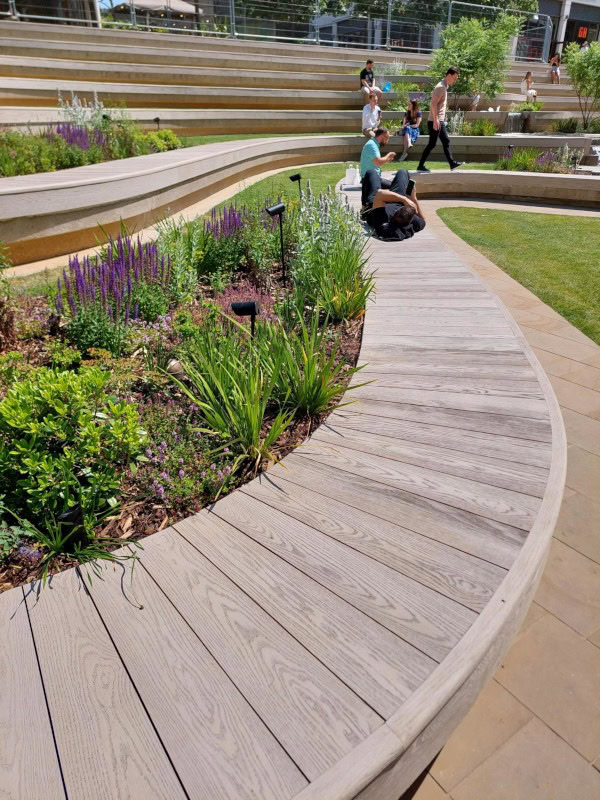
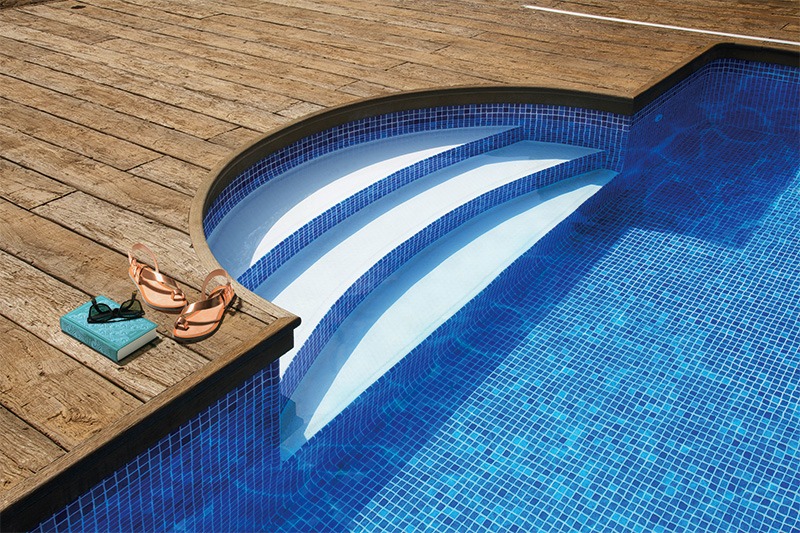
Millboard decking’s hidden fixing system works equally well on non-linear layouts. The clean surface that results, is just as achievable on a sweeping curved terrace as it is on a conventional straight run. The premium appearance that specifiers and homeowners expect is not compromised by the ambition of the design.
stability that holds the shape
One of the less-discussed challenges of curved construction is what happens after installation. Timber, beautiful as it is, moves significantly. It expands and contracts with moisture and temperature, and over time those movements can distort a carefully designed curve, open up joints, or shift the very elements that define the shape. Even some composite boards can be susceptible to the movement that affects the long-term integrity of a non-linear layout.
Millboard decking’s resin mineral composite construction offers exceptional stability in comparison to timber. Once installed, a curved section can be far less susceptible to the moisture-driven movement that can cause other materials to shift. The curve you specify at the design stage is the curve you will see five, ten, or fifteen years later. For specifiers working on prestige projects, where long-term performance matters as much as initial impact, this consistency can be a genuine advantage.